Books, videos, and music - all free from your public library!
LoginSign Up

Footer

Hoopla logo, Go to homepage
  • For Patrons
  • For Libraries (opens in new window)
  • For Vendors (opens in new window)
  • Facebook (opens in new window)
  • X (opens in new window)
  • Instagram (opens in new window)
  • YouTube (opens in new window)
  • TikTok (opens in new window)
  • LinkedIn (opens in new window)

Our Company

  • Our Story
  • Get Hoopla for your Library (opens in new window)
  • Get your content on hoopla (opens in new window)
  • Join our team (opens in new window)
  • Accessibility Statement

Our Content

  • Audiobooks
  • Ebooks
  • Movies
  • Television
  • Comics
  • BingePasses
  • Music
  • The Loop Blog

Help

  • Help Center
  • Submit Feedback
  • Facebook (opens in new window)
  • X (opens in new window)
  • Instagram (opens in new window)
  • YouTube (opens in new window)
  • TikTok (opens in new window)
  • LinkedIn (opens in new window)
  • Download on the App Store (opens in new window)
  • Get it on Google Play (opens in new window)
  • Available at Amazon Appstore (opens in new window)
© 2026 Midwest Tape, LLC. All rights reserved. Privacy Policy | Terms of Use
  • Hoopla logo
  • Browse
  • My Hoopla
  • Log In
  1. Navigate Home
  2. Audiobooks
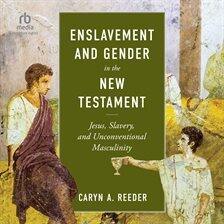
  3. Enslavement and Gender in the New Testament

AUDIOBOOK

Enslavement and Gender in the New Testament

Jesus, Slavery, and Unconventional Masculinity

Caryn A. Reeder
(0)
sign up
Duration
9h 42m
Year
2026
Language
English
Publisher
ChristianAudio.com

About

In the first-century Roman Empire, men generally held privileged status. Masculinity was conceived as exercising power over both self and others through self-discipline, violence, and authority in the community and household. This paradigm often proved socially problematic and fostered injustice and abuse of those in socially weaker positions. Masculinity was defined in contrast with femininity, childishness, and (significantly) slavery. Enslavement was masculinity's opposite, entailing a lack of power and autonomy over oneself and others.
Against this background, the New Testament uses the metaphor of slavery to describe both Jesus and what he expected of his disciples. In doing so, it redefined masculinity for the Christian. This well-researched book by an expert on gender and the New Testament explores slavery and gender in the Roman Empire and uses that background to interpret key passages that employ enslavement imagery, such as Mark 10:41-45, Luke 22:24-27, Philippians 2:1-11, and 1 Peter 2:18-25. Further, it helps listeners understand how enslaved first-century Christians may have interpreted and applied these texts. The book's conclusions address the significance of "unconventional masculinity" for Christology, discipleship, and church leadership.
Related Subjects

  • Sexuality & Gender Studies
  • Religion
  • Adult Nonfiction
  • History & Culture
  • Biblical Studies
  • Christian

Artists

Caryn A. ReederAuthor
Lisa S. WareReader