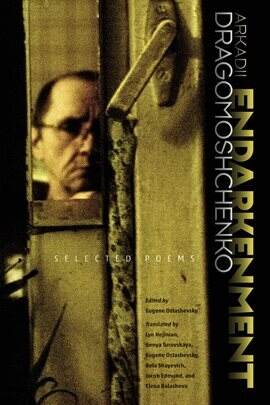
The poet Arkadii Dragomoshchenko made his debut in underground magazines in the late Soviet period, and developed an elliptic, figural style with affinities to Moscow materialism, although he lived in what was then Leningrad. Endarkenment brings together revisions of selected translations by Lyn Hejinian and Elena Balashova from his previous American titles, long out of print, with translations of new work carried out by Genya Turovskaya, Bela Shayevich, Jacob Edmond, and Eugene Ostashevsky. This chronological arrangement of Dragomoshchenko's writing represents the heights of his imaginative poetry and fragmentary lyricism from perestroika to the time of his death. His language-although "perpetually incomplete" and shifting in meaning-remains fresh and transformative, exhibiting its roots in Russian Modernism and its openness to the poet's Language School contemporaries in the United States. The collection is a crucial English introduction to Dragomoshchenko's work. It is also bilingual, with Russian texts that are otherwise hard to obtain. It also includes a foreword by Lyn Hejinian, an essay on how the poetry reads in Russian, a biography, and a list of publications. Check for the online reader's companion at endarkenment.site.wesleyan.edu.
"Dragomoshchenko's lyric seems to me to have no real American counterparts; its mode recalls Rimbaud and Trakl, Celan and possibly Aimé Cesaire... If the Language poets' refusal of the authoritative lyric self is shared by Dragomoshchenko, his poetry is much more oriented towards imaginative transformation... For Dragomoshchenko, language is not the always already used and appropriated, the pre-fo
Marjorie Perloff
""Even in translation one can make out the fleet, limpid finesse and determination of Dragomoshchenko's sprint from one end of a line to another[...] He celebrates the incantatory traffic of signifiers between speakers and, as in the case of this captivating volume, between languages as well.""