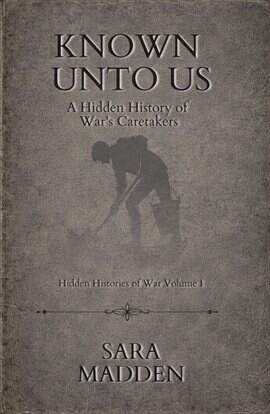
Wars are remembered through battles, generals, victories, and defeats. But after the fighting stops, someone must care for the dead.
Across centuries of human conflict, largely unseen people have performed one of war's most necessary and devastating tasks: recovering bodies, identifying remains, digging graves, recording names, returning the fallen to their families, and preserving the memory of those who might otherwise disappear.
Known Unto Us: The Hidden History of War's Caretakers tells their story.
From ancient burial traditions and the first attempts to establish laws protecting the dead to the American Civil War, World War I, World War II, Korea, Vietnam, Iraq, Afghanistan, and modern forensic recovery missions, Sara Madden traces the changing ways societies have confronted the bodies war leaves behind.
These caretakers have carried many names: gravediggers, stretcher-bearers, Graves Registration personnel, mortuary workers, recordkeepers, forensic anthropologists, chaplains, recovery teams, and companions of the fallen.
Their work has rarely been celebrated.
Yet without them, countless families would never have known where their loved ones rested.
Known Unto Us explores the development of battlefield burial and identification, military cemeteries, dog tags, DNA analysis, forensic anthropology, casualty records, dignified transfer, repatriation, and the international laws intended to protect the dead. It also examines the people too often excluded from traditional military histories, including formerly enslaved burial workers, Black soldiers, women, Indigenous peoples, immigrants, civilian contractors, and others whose labor was essential but frequently marginalized or forgotten.
Moving beyond logistics, the book confronts the psychological and moral cost of this work: grief, trauma, moral injury, memory, and the burden carried by those who repeatedly encountered what battle left behind.
It also asks a larger question.
What do we owe the dead?
Drawing together military history, anthropology, humanitarian law, archaeology, forensic science, cultural traditions, and remembrance, Known Unto Us restores the caretakers of war's dead to the historical record.
This is not a history of how wars are fought.
It is a history of what happens afterward.
Of the hands that lifted the fallen.
The people who recorded their names.
The witnesses who carried them home.
They remembered the dead.
Now it is time to remember them.
The book itself ranges from ancient warfare and the laws of war through the Civil War, both World Wars, Korea, Vietnam, and modern conflicts, before turning to trauma, anthropology, and contemporary mortuary and recovery practices.