Books, videos, and music - all free from your public library!
LoginSign Up

Footer

Hoopla logo, Go to homepage
  • For Patrons
  • For Libraries (opens in new window)
  • For Vendors (opens in new window)
  • Facebook (opens in new window)
  • X (opens in new window)
  • Instagram (opens in new window)
  • YouTube (opens in new window)
  • TikTok (opens in new window)
  • LinkedIn (opens in new window)

Our Company

  • Our Story
  • Get Hoopla for your Library (opens in new window)
  • Get your content on hoopla (opens in new window)
  • Join our team (opens in new window)
  • Accessibility Statement

Our Content

  • Audiobooks
  • Ebooks
  • Movies
  • Television
  • Comics
  • BingePasses
  • Music
  • The Loop Blog

Help

  • Help Center
  • Submit Feedback
  • Facebook (opens in new window)
  • X (opens in new window)
  • Instagram (opens in new window)
  • YouTube (opens in new window)
  • TikTok (opens in new window)
  • LinkedIn (opens in new window)
  • Download on the App Store (opens in new window)
  • Get it on Google Play (opens in new window)
  • Available at Amazon Appstore (opens in new window)
© 2026 Midwest Tape, LLC. All rights reserved. Privacy Policy | Terms of Use
  • Hoopla logo
  • Browse
  • My Hoopla
  • Log In
  1. Navigate Home
  2. Ebooks
  3. Millet Proteins

EBOOK

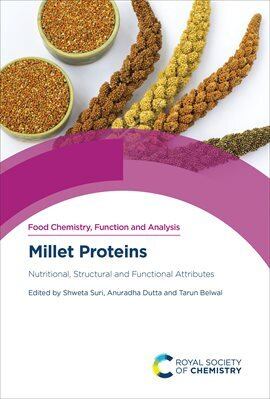
Millet Proteins

Nutritional, Structural and Functional Attributes

Various Authors
(0)
sign up
Year
2026
Language
English
Publisher
RSC

About

In a world increasingly turning to plant-based proteins for health, sustainability, and ethical reasons, millet stands out as a versatile and ancient grain with remarkable benefits. Grown primarily in Asia and Africa, these small, round whole grains are celebrated for their resilience to drought and pests, making them a sustainable choice for both human consumption and livestock feed. Millet boasts a high protein content (7–13%), positioning it as a strong contender against animal proteins, and is gluten-free, making it a popular choice in Western diets.


This comprehensive book investigates the unique characteristics of millet protein, exploring its bioactive properties, nutritional value and therapeutic benefits. It provides an in-depth look at the extraction and utilization processes, covering both thermal and non-thermal methods such as ultrasound, pulsed electric field, and high-pressure processing.


Concluding with a forward-looking perspective, this book examines the prospects of millet protein in the food industry. Essential reading for food scientists and product developers, it offers valuable insights into the potential of millet protein as a sustainable and nutritious food source.
Related Subjects

  • Nutrition
  • Medical
  • Adult Nonfiction
  • Biochemistry
  • Life Sciences
  • Science
  • General
  • Food Science
  • Technology & Engineering

Artists

Various AuthorsAuthor