Books, videos, and music - all free from your public library!
LoginSign Up

Footer

Hoopla logo, Go to homepage
  • For Patrons
  • For Libraries (opens in new window)
  • For Vendors (opens in new window)
  • Facebook (opens in new window)
  • X (opens in new window)
  • Instagram (opens in new window)
  • YouTube (opens in new window)
  • TikTok (opens in new window)
  • LinkedIn (opens in new window)

Our Company

  • Our Story
  • Get Hoopla for your Library (opens in new window)
  • Get your content on hoopla (opens in new window)
  • Join our team (opens in new window)
  • Accessibility Statement

Our Content

  • Audiobooks
  • Ebooks
  • Movies
  • Television
  • Comics
  • BingePasses
  • Music
  • The Loop Blog

Help

  • Help Center
  • Submit Feedback
  • Facebook (opens in new window)
  • X (opens in new window)
  • Instagram (opens in new window)
  • YouTube (opens in new window)
  • TikTok (opens in new window)
  • LinkedIn (opens in new window)
  • Download on the App Store (opens in new window)
  • Get it on Google Play (opens in new window)
  • Available at Amazon Appstore (opens in new window)
© 2026 Midwest Tape, LLC. All rights reserved. Privacy Policy | Terms of Use
  • Hoopla logo
  • Browse
  • My Hoopla
  • Log In
  1. Navigate Home
  2. Ebooks
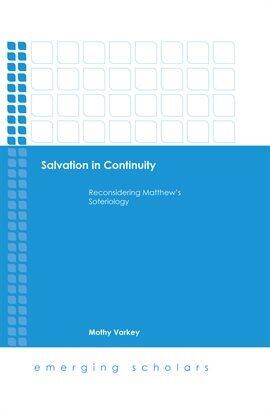
  3. Salvation in Continuity

EBOOK

Salvation in Continuity

Reconsidering Matthew's Soteriology

Mothy VarkeySeries: Emerging Scholars
(0)
sign up
Pages
304
Year
2017
Language
English
Publisher
Augsburg Fortress Publishers

About

It is clear that according to Matthew's Gospel, Jesus came to "save his people from their sins" (1:21), to "give his life as a ransom for many" (20:28), to have his blood "poured out for many for the forgiveness of sins" (26:28). But if salvation as promised in 1:21 is achieved only through Jesus' death, asks Mothy Varkey, are the twenty-five preceding chapters merely preamble? Varkey argues, to the contrary, that the key theme of salvation in the Gospel is presented by Matthew as being in continuity with God's saving acts in the history of the Jewish people. Further, Varkey insists that, as a consequence of this theology of continuity, Jesus' death on the cross represents just one of the many ways in which the Gospel presents God's salvific deeds. The death of Jesus, while unique due to his ontological status as Son of God, should not be distinguished too sharply from his saving acts during his earthly ministry, which took the form of salvific teaching of the Torah, healings, exorcisms, and forgiving of sins. The result is a narrative emphasizing the continuity of salvation throughout Jesus life, reaching into Israel's past, and beyond into the work of the disciples.

Related Subjects

  • General (New Testament)
  • New Testament (Biblical Commentary)
  • Biblical Commentary
  • Religion
  • Adult Nonfiction
  • General (New Testament) (New Testament, Biblical Studies)
  • New Testament (Biblical Studies)
  • Biblical Studies
  • Jesus, the Gospels & Acts
  • Christian

Extended Details

  • SeriesEmerging Scholars

    Artists

    Mothy VarkeyAuthor